
The $18 expense report and the defunded intern programs: symbols of corporate America’s dysfunction

A senior vice president at Okta approved a gratuity that was $18 over the company’s threshold on a $2,000 dinner. The auditing system flagged it, a person wrote it up, an email was sent, his assistant processed it. It landed on the COO’s desk — routed there from the board.
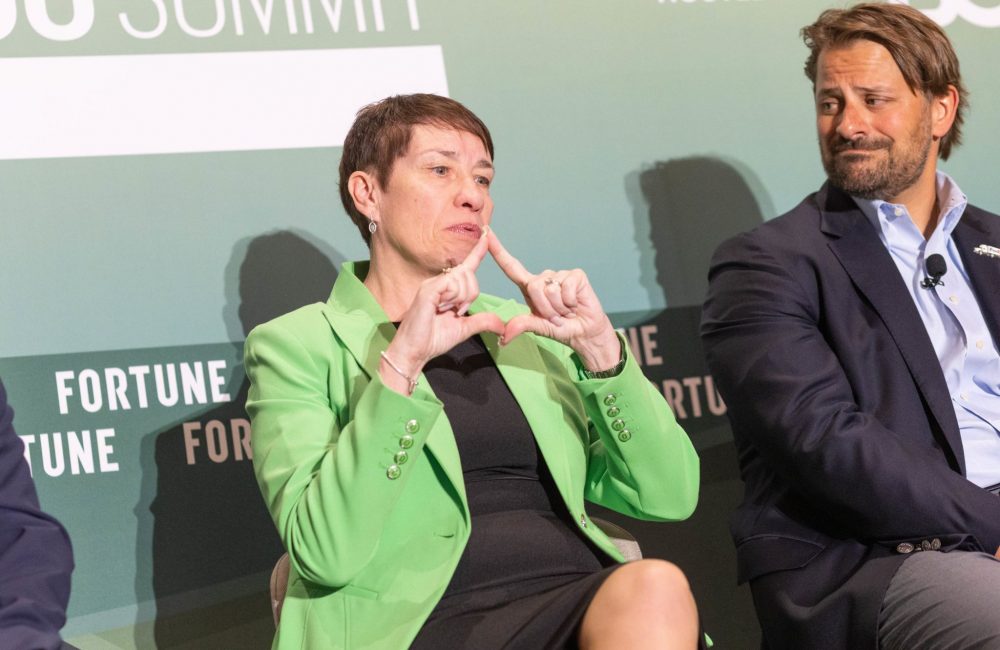
Thank you for reading this post, don't forget to subscribe!“I’m paying somebody to audit that expense report,” Okta President and COO Eric Kelleher said at a BCG-hosted breakfast roundtable at the Fortune COO Summit in Scottsdale, Arizona. “I’m paying somebody to flag that, and I’m paying somebody to write up an email and send to me, and I’m paying my assistant to receive the email and process it.”
He let that hang in the air. “That’s waste.”
Of course, we all know exactly why that process exists: someone built it and kept it that way. That person is almost certainly still in the building, certain it’s the right way to do things, defending the inefficient structure that everyone else has to slog through.
That’s a lot harder problem to fix than an expense report.
The disease: confirmation bias with a salary attached
Fortune Senior Writer Phil Wahba moderated a conversation between Kelleher, FedEx Freight VP Patrick Maier, BCG Partner and Managing Director Geraldine Rhodes and IBM SVP Joanne Wright, digging into what every COO needs to master: the line items that clog up executives’ profits and losses.
All of the guests described what happens when the people who design systems are also the ones evaluating them.
“People who build a function over time. It’s hard for them to see where they can be optimized in what they’ve built,” Kelleher said. “They’ve built something the best way they know how, and they have a confirmation bias that things run the right way.”
BCG’s Rose put a number on the cost of that bias: roughly 60% of executives surveyed by her firm have seen minimal or no return on AI investment—not because the tools don’t work, but because companies are deploying them on top of broken processes without fixing the processes first. Sure, you can automate the expense audit, but if no one ever questions why the audit exists in that form in the first place, you’ve just made your dysfunction more efficient.
The same instinct to accumulate without interrogating shows up everywhere. FedEx Freight’s Maier, VP of Operations, Custom Critical, found it hiding in his own company’s books: a sponsorship of a local minor league team that wasn’t generating sales meetings, and a membership at a prestigious country club that nobody was using for customer-facing events. “When we asked what we were doing with it,” Maier said, “we found that none of it was being used for sales-facing events.” The spending had simply accumulated, invisible because everyone around it had stopped asking why.
IBM’s Wright, SVP of Transformation and Operations, ran the same drill across a much larger organization. “We’re 115 years old,” she said. “We are really good at doing more with less.” But it’s a rare thing for any company, she added, to take a deep breath and ask: “what can we stop?”
IBM’s answer to that question—a two-year end-to-end transformation that started not with a technology deployment but with a blank-page question—has so far yielded a 30% improvement in its operating model, or roughly $4.5 billion. That is a lot of $18 expenses.
The status problem nobody wants to name
What makes this harder, the panelists agreed, is that the people most resistant to change are often the ones most essential to the business right now. Their value and the processes they oversee are, in their own accounting, the same thing. Leaning into disruption can undermine their own standing at the company.
Rose framed this as a sponsorship problem: transformation efforts stall, she argued, when there’s no executive with enough cross-functional authority to force people out of their silos and confront the assumptions underneath them. “You have to have that sponsorship at the top,” she said, “with somebody that’s kind of bumped through the silos and really takes a fresh look at what do we want to achieve strategically.”
Without that air cover, the status-holders win. Not through sabotage, but through inertia. They keep their heads down, run their function the way they’ve always run it, and wait for the transformation initiative to fade like every other one before it.
Kelleher said he watches for the early warning signs. “It’s a red flag for me when I have teams defunding their intern program,” he said, adding that he goes and talks to people who are cutting back. He’s concerned that it’s “because they’re not open to new ideas.”
“Just, everyone should be hiring interns,” Kelleher continued. “Massive volume. The more you can afford, the better,” he said. “The thing that’s daunting to your team because they’ve been doing it for 10 years and it’s draining is exciting to them. The infusion of energy is just awesome.”
The point isn’t that interns are better workers. It’s that they haven’t been trained to accept the absurdities yet. They walk in and ask why as genuine curiosity. They’re the only people in the building with no stake in the answer.
The interns coming through the door in 2026 have grown up treating AI as a default, not a feature. Wright watched IBM’s latest cohort arrive and described them as “hungry, hungry, hungry—using AI to drive everything they do from the minute they wake up to the minute they finish at night. And there’s no fear. In fact, it’s the innovation and the creativity is outstanding.”
Kelleher’s longer-term prescription goes further than interns. “I very firmly believe we need to be giving [managers] budget for work, not headcount,” he said. “They’re going to spend some of that on headcount and they’re going to spend some of that on technology. And that is a leap for everyone in industry right now.”
The people who’ve spent a decade building the audit process may not be the ones to redesign it. But the person who just walked in the door, with no stake in the answer and no memory of how it was built, might be exactly right for the job. As Kelleher said, “we just don’t think that way.”





Leave a Reply