


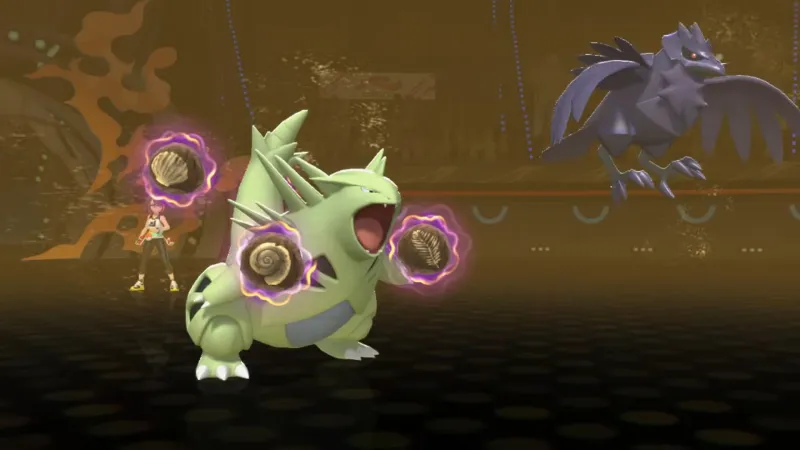
Pokémon has persisted for decades for many reasons – cute characters, a popular anime, lucrative trading cards – but chief among them is the game series’ consistently satisfying turn-based battles. Pokémon Champions captures this highly refined system, cuts out much of the grinding necessary to train a viable team, and puts a thrilling competitive battling system in the hands of players around the world. The features around those battles, however, are often confusing and uneven, and despite a solid core, Pokémon Champions fails to reach its full potential.
As a longtime observer of the competitive Pokémon scene, I am glad to play a game that sidesteps the dozens of hours of legwork necessary to even participate in ranked play. Mainline games require you to catch, level up, evolve, and EV train monsters, sometimes even sourcing them from past games in the series. In Champions, there are no levels, and swapping natures, abilities, movesets, and stat spreads is as easy as clicking menu options. After years of watching, I’m finally able to participate, and that alone is worth commending.
Champions includes single and double battles, each in ranked and unranked modes. There is not much content on the surface, but for a free-to-play game, infinitely playable multiplayer is plenty to satisfy me. Each format includes its own strategies, and building teams catered to either style is one of my favorite parts. Champions sees the return of mega evolutions, which allows one Pokémon per team to become more powerful for the battle’s duration. Recent competitions have centered around Scarlet and Violet’s terastallization mechanic, so the return of mega evolutions shifts the meta in a fun, fresh direction.

Series veterans can import their favorite companions from Pokémon Home, a cloud-based Pokémon storage system, but the available options are shockingly limited. The series has over 1,000 creatures, but only around 190 are available in Champions. Held items are also severely limited, with many major items like the choice band, assault vest, or life orb nowhere to be seen. For a game billed as the new future of competitive Pokémon, it’s surprisingly restrictive.
A limited spread of options is more appealing to newcomers, however. Even then, the onboarding process for someone completely fresh is lacking. In true Pokémon fashion, the tutorial explains the most basic concepts, with instructions aimed at true beginners. Past that tutorial, however, it’s a little overwhelming. How do you build a team? Which items are best with which Pokémon? Which Pokémon are even good? Anyone seriously interested in answering these questions can access plenty of vast, free resources on the internet, but Champions teaches such basic building blocks that it implies it can be played in a vacuum. That is not the case.

The microtransactions also disproportionately affect new players. VP, the game’s currency, is needed for just about everything. Cosmetics understandably cost VP, but so does unlocking held items and mega stones. Collecting Pokémon is free once a day, but keeping them permanently costs VP. Training them to have different moves or stats costs VP. You gain VP by playing battles (winning gets you bonus VP), and Champions is generous in the opening hours. Still, for a game so seemingly focused on pulling new players in, it’s hard to shake the feeling that you should have been buying and playing the main series games this whole time.
It’s never been easier to get into the competitive Pokémon scene, and playing Pokémon Champions has been a highlight of my last week. Champions seems to be designed for people like me, who are familiar with competitive battles and want an easier way to participate. However, it also makes moves to cater to completely new players and extremely seasoned players, and by trying to satisfy all three audiences, it fails to properly serve either. With minimal content and a pressure to collect Pokémon in mainline games, it works best as an additional mode for the main series. As a standalone product, it’s a game confused about its own goals. And much like the in-game status condition, that confusion only hurts it in the long run.





Leave a Reply