

When most people think of grease traps, they probably think of commercial kitchens. However, these handy devices aren’t just meant for your favorite fast food chain. Grease traps can be a lifesaver for homes with older plumbing or clog-prone septic systems.
If you’re considering installing a grease trap in your home, you’re in the right place. Read on to learn more about what grease traps are, why you might need one, and how to install them.
What Is a Grease Trap?
A grease trap is a plumbing device that captures fats, oils, and grease (FOG) before they enter your home’s plumbing. However, grease traps still allow wastewater to pass through while preventing food solids and grease from entering the sewage system.
Grease traps may not clear clogged drains, but they can help prevent them from clogging in the first place. They come in various sizes and shapes, and you can install them either inside or outside the home.

Today’s Homeowner Tips
Grease trap cleanings are easy. Ideally, you should clean your trap at least once every three months, but never let it get more than 25% full. You can use your grease interceptor to recycle graywater to use in your lawn or garden.
Why Do You Need a Grease Trap for Your Home?
There are two main reasons why a homeowner might want to install a grease trap — protecting their plumbing system from clogs and reducing the amount of FOG that goes into wastewater treatment systems.
Preventing Plumbing Clogs
Fats, oils, and grease become solid once they cool down. As they harden, they can cause clogs, backups, and overflows in your plumbing system.
It’s never a good idea to wash grease down the drain, and if you do, it could harm your home’s septic system. Installing a grease trap can help protect against these mistakes, saving homeowners time and money on repairs.
Reducing Water Pollution
Grease traps can help limit water pollution by reducing the amount of grease that enters wastewater treatment systems. When FOG enters municipal sewer pipes, it can lead to blockages that may cause raw sewage to flow directly into groundwater.
By cutting off grease at the source, you make it easier for your municipality to keep the city’s infrastructure safe.
How Does a Grease Trap Work?
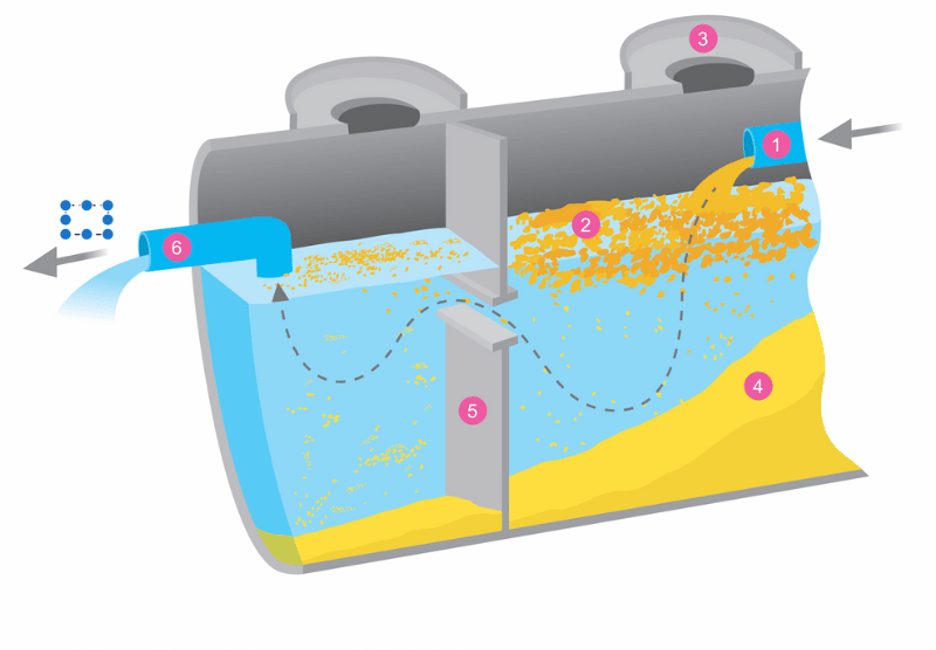
Grease traps operate using a simple yet effective principle: gravity. As wastewater enters the trap, it separates into three layers:
- Fats, oils, and grease float to the top
- Food particles and solids sink to the bottom
- Relatively clear water remains in the middle
The trap fills from the top down as grease enters it, while the cleaner water in the middle exits into the sewer lines. This process keeps your drains free from grease without cutting off the flow of wastewater.
Some grease traps also use baffles, which are curved wall structures that help slow down and better control the water flow rate as it enters the drainage system. These baffles improve the trap’s ability to separate FOG from wastewater.
Check out the video below for a visual guide on how grease traps work.
Types of Residential Grease Traps
There are several types of grease traps available for residential use, each with its advantages. Here are the most common types of grease traps for homes:
Gravity Grease Traps
Gravity grease traps are the most common type in residential settings. These traps rely only on gravity to separate grease and oil from water. They’re simple, effective, and require minimal maintenance.
Passive Grease Traps
Passive grease traps are designed specifically for smaller commercial kitchens and residential properties. These traps use a series of baffles and screens to trap grease and oil while allowing water to flow out the bottom. They’re compact and efficient, making them a good choice for homes with limited space.
Hydromechanical Grease Traps
Hydromechanical grease traps use a combination of water flow and mechanical separation to remove oil and grease from wastewater. These traps have a series of baffles and screens that trap the grease and oil. These are more common in commercial settings, so you won’t need them in your home unless you frequently cook large meals.
Above-Ground Grease Traps
Above-ground grease traps are portable, so you can move them around as needed. They’re also easier to clean and maintain than in-ground traps, making them a good choice for homeowners who want more flexibility.
How To Install a Grease Trap
Installing a grease trap may seem intimidating, but a homeowner with basic plumbing knowledge should be able to do this DIY task with ease. Here’s a general overview of the installation process:
- Choose a suitable location for the grease trap, typically under the kitchen sink or in the food preparation area.
- Measure the distance from the bottom of the sink to the drain pipe.
- Select a grease trap that fits within the available space and matches the drain size. Be sure to check local laws for any specific requirements.
- Attach the inlet and outlet pipes of the grease trap to the drain pipe using plumbing connectors. Use plumber’s tape on threaded connections to ensure a tight seal.
- Connect the trap to the plumbing system, making sure all wastewater flows through the trap before entering the main drain line.
- Test the system by running water through the sink and ensuring it flows properly through the grease trap and out through the drain pipe.
Remember, it’s crucial to follow all local laws and manufacturer instructions when installing a grease trap. If you’re not confident in your plumbing skills or are unsure about local requirements, it’s best to hire a professional plumber for the installation.
Maintaining Your Grease Trap
Once you install your grease trap, you can’t just set it up and forget about it. You’ll need to clean the trap regularly to help maintain your septic tank. For most homes, cleaning every three months is enough, but never let the trap get more than 25% full. Otherwise, you could risk clogging.
Remember to follow your local laws for the proper disposal of residential grease. In most cases, you can’t just toss it out in the backyard. Many areas have specific laws for grease disposal, so check local guidelines.
Final Thoughts About Residential Grease Traps
Grease traps may not be a common fixture in most homes, but they can still be a huge benefit for homeowners who cook a lot. However, the best way to prevent clogged drains is to avoid pouring grease down the drain to begin with.
Be sure to warn your housemates about grease waste to help cut down on FOG in your drains. By preventing any grease from going down the drain, you can save money on repairs and frustrating plumbing issues in your home.
Still, if you want to safeguard your drains and prevent clogs, a grease trap is one of the best ways to keep your pipes flowing smoothly. If you’re not confident in your DIY skills, contact a local plumber for an estimate below.
FAQs About Grease Traps for Homes
Why would a house need a grease trap?
If your home produces a lot of fats, oils, and grease (FOG) during cooking, installing a grease trap helps protect your plumbing system and reduces your environmental impact.
Where should I install my grease trap?
Most people install grease traps in homes with a commercial-type kitchen or where homeowners do a large amount of cooking. These traps are typically underneath the kitchen sink or in the basement.
Are grease traps safe?
Grease traps are generally safe, but if you don’t clean and maintain them regularly, they can become a breeding ground for bacteria.




Leave a Reply