
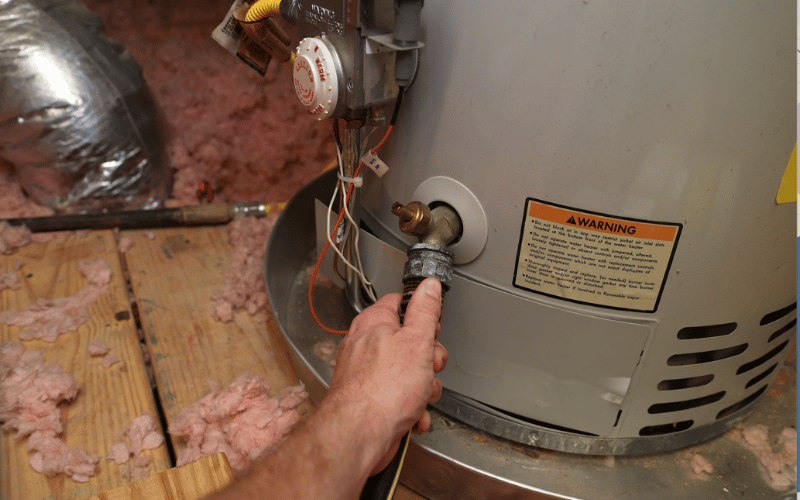

Your water heater is an unsung home hero—it provides hot water to help with cleaning and washing and make your showers and baths more enjoyable. Unfortunately, since we rely so heavily on our water heaters, they go through a lot of wear and tear that can limit their life, reduce efficiency, and harm your hot water supply.
In this guide, we’ll explain why water heater maintenance is so crucial and provide five easy DIY tips for regular maintenance. We’ll also explain how to tell if you need professional water heater repair or total replacement.
Why Water Heater Maintenance Is Important
We call on water heaters constantly to provide hot water to our fixtures and appliances, so they’re constantly under immense strain. As such, you need to maintain them properly to avoid excessive wear and tear and extend their useful life as much as possible.
If you don’t carry out proper hot water heater maintenance, you can quickly find yourself in hot water—or, rather, without hot water. Sediment buildup and corrosion could take over, leading to these consequences:
- Decreased hot water supply
- Higher energy consumption
- Potential water damage from leaks
- Unexpected cold showers
- Costly repairs or replacement
By planning a routine maintenance schedule, you can avoid these problems.
Tips and Tricks for Maintaining Your Water Heater
While there are some maintenance tasks you should leave to a licensed plumber, there are five things you can do yourself to keep your water heater working efficiently. Let’s go through each one in depth.
1. Flush Your Water Heater
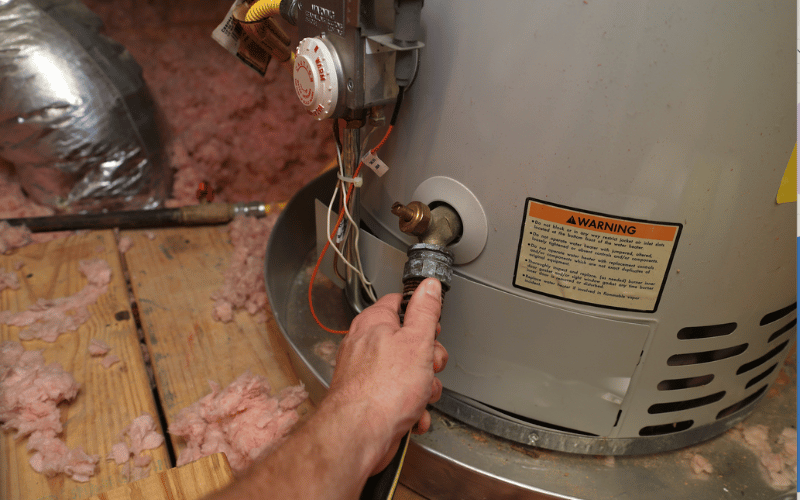
Why do it: Remove sediment and improve efficiency
Tools needed: Small section of garden hose, 5-gallon bucket
How often to do it: 1 to 2 times per year
Difficulty: Easy
Flushing your water heater twice per year is one of the most effective things you can do to keep water running well.
During normal operation, sediment, rust, and minerals from your water will build up inside the water heater. When they accumulate enough, the water heater will be under more strain to keep up with demand. Some particles, like hard water minerals, can also corrode the inside of your tank.
You can do a partial flush or a total flush, the latter of which requires that you shut down your water heater to avoid damage. We recommend a total water heater flush, but make sure the power to the appliance is cut before you begin. That could involve shutting the gas supply for a gas water heater or the breaker for an electric water heater.
Lastly, remember that this does not apply to tankless water heaters.
To flush your water heater, follow these steps:
- Shut off the power and water: Shut off the power to your water heater. Skipping this step can lead to irrevocable damage and necessitate a total replacement. You should also shut off the cold water supply to the water heater. This can be done by closing the valve on the cold pipe running into the top of the tank.
- Attach the hose and flush out the bucket: Connect a short hose with an attachment to the nozzle located near the bottom of your water heater tank. Slowly open the valve to allow water to flow out into your 5-gallon bucket. When the bucket is close to full, shut the drain valve and empty the bucket. Repeat this process until no water comes out of your water heater.
- Flush the cold water supply: Shut the drain valve and temporarily open the cold water supply. This should collect any sediment remaining behind. After about 30 seconds, close the cold water supply, open the drain valve, and repeat the process to drain the tank fully.
- Let the tank refill: Finally, make sure the drain valve is fully closed, then open the cold water supply valve. Wait about 10 minutes for the tank to fill completely, then restore power to your water heater.
2. Test the Temperature-Pressure Relief Valve

Why do it: Avoid dangerously high water pressure in your tank
Tools needed: 5-gallon bucket
How often to do it: 1 to 2 times per year
Difficulty: Very easy
The temperature-pressure relief valve, sometimes called the TPR valve, pressure release valve, or T&P valve, releases water from your water heater if the pressure inside gets too high. Under normal operation, the TPR valve should never activate. However, if it does, it can prevent serious damage to the inside of the tank.
TPR valves can malfunction, causing them to fail in high pressure or even leak when the pressure isn’t too high. Testing the valve is a good way to avoid costly repairs and property damage.
Here’s how to do it:
- Find the valve: Locate the TPR valve on your water heater. It usually has a toggle and an open piece of pipe extending down from it toward the floor.
- Place a bucket: Place your 5-gallon bucket under the pressure release valve discharge pipe.
- Prepare to open the release valve: The water that will come out of the valve when opened will likely be close to 140 degrees, so we recommend wrapping your hand in a rag and being careful not to let the water scald you. When you’re ready, pull the toggle to open the release valve. Water should flow into the bucket.
- Test the valve: Let the water run for a few seconds, then release it to close it again. If you can’t open the valve or notice water continuing to drip from it after releasing it, you’ll need to have the valve replaced by a plumber.
3. Turn Down the Water Temperature

Why do it: Reduce strain on your water heater
Tools needed: Screwdriver
How often to do it: One-time only
Difficulty: Very easy
Your water heater has two thermostats to monitor temperatures at the top and bottom of the tank. The bottom one usually controls the hottest temperature your water can reach. The top one controls the minimum temperature. Most people set them five to 10 degrees apart to keep the temperature suitable.
By reducing your water heater temperature, you’re easing the strain on the appliance and prolonging its lifespan. Most homeowners prefer a temperature setting of 140 degrees Fahrenheit, but turning yours down to 120 to 130 degrees can reduce energy consumption and wear and tear on the water heater.
Before you change the temperature, know where your water comes from. If you’re connected to public water, you probably won’t have any issues barring a crisis. However, for homes using well water, bacteria might thrive in a lower temperature setting, and it could take a higher 140-degree temperature to kill them off. If you drop the temperature and notice a sulfur smell from your hot water, bump the temperature back up.
To adjust the water temperature, follow these steps:
- Find the thermostats: Locate the thermostats on your water heater’s exterior. These can sometimes hide behind a small bump-out that you can unscrew. You may need to move some insulation out of the way to get to the actual thermostats.
- Adjust the temperature: Use a screwdriver to turn the adjustment screws to your desired settings.
- Put everything back as it was: Replace any insulation and reattach any thermostat covers you removed. Wait a few hours, then test the water temperature at a faucet.
4. Check Your Anode Rod

Why do it: Avoid dangerous corrosion of your water heater tank
Tools needed: Socket wrench and 1/16” socket, 5-gallon bucket, new anode rod (if applicable)
How often to do it: 1 time per year
Difficulty: Very easy
Your water heater’s inside lining will naturally corrode from minerals in the water, such as calcium and magnesium. A sacrificial anode rod hangs inside the tank to prevent this from happening. The anode rod is made from metals that corrode more easily than the steel making up the tank, so it corrodes before the tank does. If the anode rod corrodes entirely, then the tank will start to corrode—eventually destroying your water heater.
Sometimes, the anode rod attachment will be obvious and located right on top of the tank. Other times, you may have to unscrew any caps on your water heater and move insulation underneath to locate the anode rod.
Once you know where it is, follow the steps below to check it and replace it as needed.
- Turn off the water and power: Turn off the water supply and fuel source for the water heater, and let the tank cool as necessary.
- Let out some water: Place your bucket under the drain valve. Let five to 10 gallons of water out and dump it down a nearby drain.
- Remove the anode rod: Using a socket wrench, back out the anode rod and pull it out of the tank entirely.
- Inspect the rod: Inspect the rod for corrosion. If it looks heavily damaged, like the rod on top in the image, it’s time to buy a new one. If it looks okay, simply screw it back in.
- Clean up: Once your anode rod is back in place, put back any insulation and covers, open the cold water supply, and turn the fuel source back on.
5. Install Insulation

Why do it: Improve efficiency and reduce wear and tear
Tools needed: Water heater insulation jacket, pipe insulation, utility knife
How often to do it: One-time only
Difficulty: Very easy
Your water heater comes heavily insulated, but adding insulation to the outside and the hot water pipes leaving the appliance will further reduce energy loss to the surrounding area. You can insulate just the water heater or just the pipes, but we recommend doing both to boost your water heater’s efficiency.
To insulate the water heater itself, follow these steps:
- Shut off the power supply: Tanks can get hot to work with, so don’t burn yourself. Turn off the power and water supply to your water heater, and let it cool as necessary.
- Measure the tank and cut the blanket: Measure the circumference of your water heater tank with a piece of string. Then, use your utility knife to cut the blanket to the right size.
- Place the blanket: Position the blank over the water heater tank. However, for safety reasons, you should leave the drain valve and TPR valve exposed. Cut around them as necessary.
- Secure the blanket: Most water heater blanket kits include tape, but you can also use duct tape to secure the blanket to the tank.
- Turn the water heater back on: Turn the power and water supply back on.
To insulate the pipes, follow these steps:
- Measure the pipes: Measure the length of the pipes extending from your water heater.
- Cut the insulation: Cut pipe insulation of the right diameter to fit.
- Wrap the insulation around the pipes: Wrap each length of insulation around the pipes until they enter your wall.
The Impact of Water Quality on Maintenance
Your home’s water quality can affect your water heater’s performance and lifespan. Therefore, a lesser-known maintenance tip is to get a home water quality test.
Hard water has high levels of dissolved calcium, magnesium, and other minerals that can cause scale buildup inside the tank. That buildup reduces efficiency and accelerates part wear. If you live in a hard water area, you may need to flush your water heater more frequently, but you can install a softener to mitigate the effects.
Iron in your water can also cause fixtures to rust and internal parts in a water heater to deteriorate. If iron is prevalent in your water supply, use a filtration system to help remove it before it can reach your water heater.
Signs Your Water Heater Needs Repair or Replacement
Most water heaters last between eight and 12 years. Even when you use the routine maintenance tips above, your water heater will eventually need to be repaired or replaced.
Here are some signs that indicate your water heater needs repair:
- Insufficient hot water delivery
- Minor leaks around connections only
- Clinking noises from the inside of your water heater as it operates
- Issues with your pilot light continuously going out (for gas water heaters)
Other signs like these indicate it might be time to replace your water heater entirely:
- Severe leaks from the tank itself, not the connections
- A completely destroyed anode rod
- Long wait times for hot water when you turn on a fixture
If you’re experiencing any of these issues, contact a certified plumber for a lasting fix. The tool below can connect you to reliable plumbers in your area that are water heater experts.
FAQs about Water Heater Maintenance
How often should you flush a water heater?
We recommend flushing your water heater one to two times per year. If you live in an area with hard water with minerals that expedite corrosion and settle more readily in your tank, we recommend flushing your water heater twice a year. If you live in an area with soft water, once per year should be plenty.
What happens if you don’t flush your water heater?
The longer your water heater goes without flushing, the more sediment will accrue in the bottom of the tank. Sediment build-up decreases efficiency, leaving you with a smaller supply of hot water and a shortened water heater lifespan.
How to flush sediment out of a water heater?
First, shut off the cold water supply and the fuel source. Next, open the drain valve and let the water drain into a bucket for disposal. Continue until no water comes out. Turn on the cold water supply for a few seconds to wash the bottom of the tank clean, and let it drain. Finally, close the drain valve, open the water supply, and turn your fuel source back on.




Leave a Reply